
Some restaurants disappear the moment the crowd moves on. Tatsuya Goodwood has done the harder thing. It has stayed.
Founded in 1998 by Chia Pee Tat, tucked inside Goodwood Park Hotel in Singapore, it belongs to a quieter era of Japanese dining. Before the omakase counter became a status symbol. Before every second sushi spot promised you Toyosu tuna and a waiting list.
I came with one question. In a city now flooded with omakase counters and sushi bento options, does an old hotel Japanese restaurant still earn what it charges? The answer, I think, depends entirely on where you sit and what you order.
First Impressions of Authentic Japanese Cuisine and Sushi Bento at Tatsuya Goodwood in Goodwood Park Hotel
Tatsuya Goodwood sits inside Goodwood Park Hotel on Scotts Road, close enough to Orchard MRT that you can walk it in eight to ten minutes, though the last stretch feels grander than a mall food court has any right to make you feel.
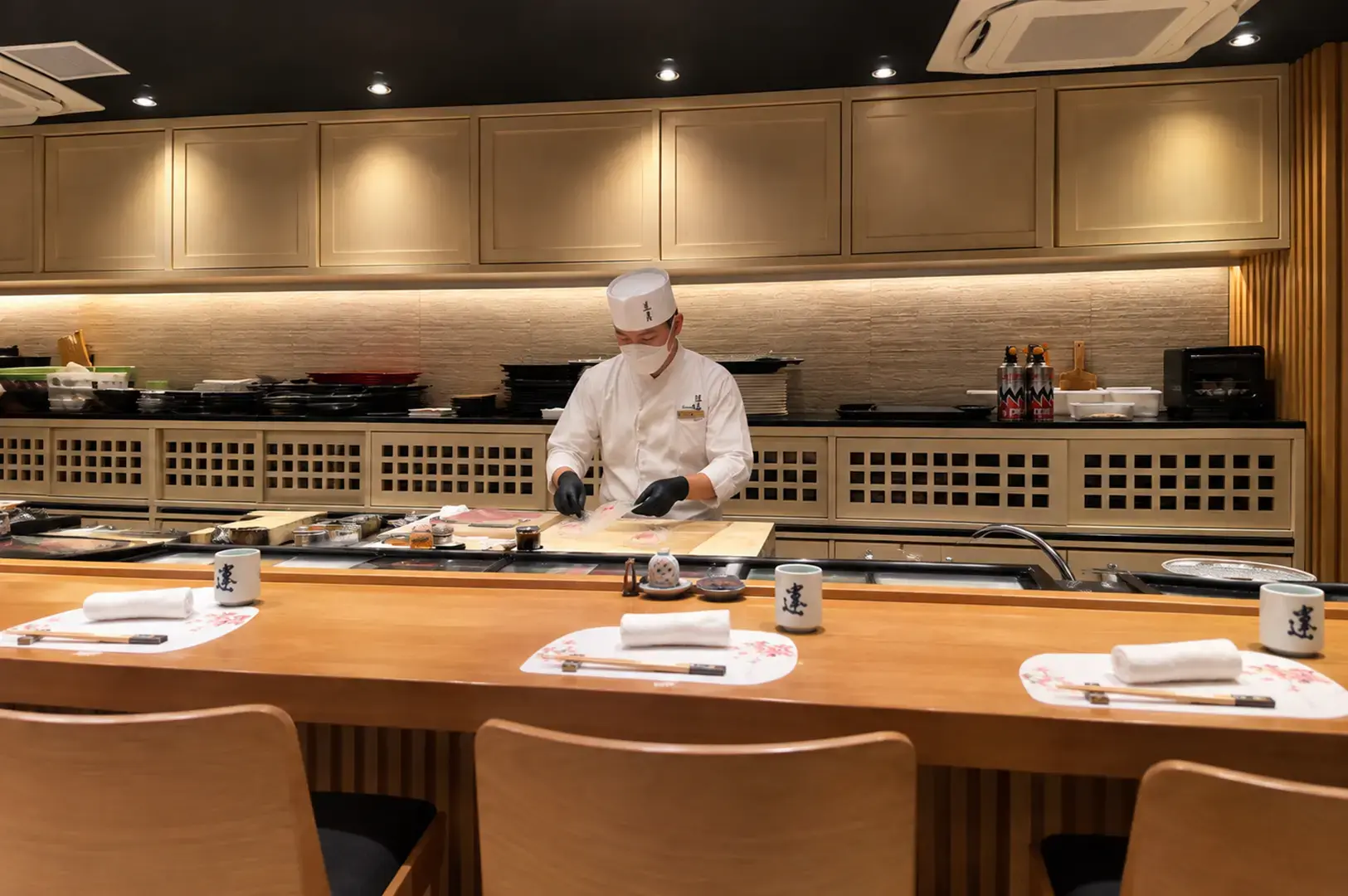
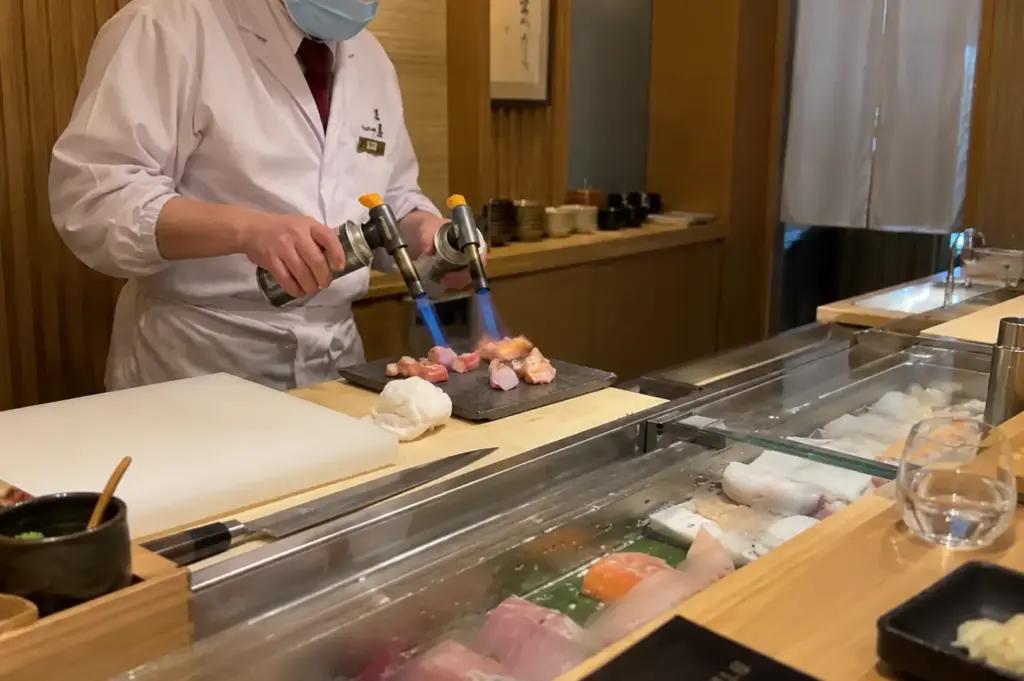
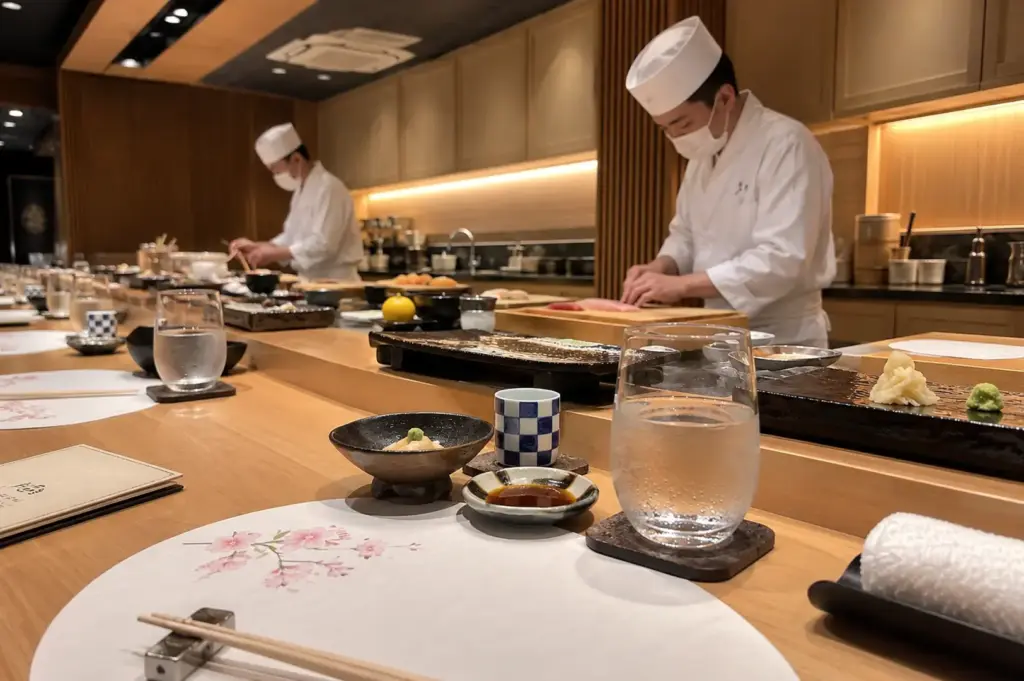
Inside, the room leans traditional. Warm wood, pinewood accents, the kind of finishes that don’t chase modernity because they don’t need to. It’s intimate rather than sprawling, with a sushi counter that older accounts describe as seating around 23, facing the chefs directly. This is hotel fine dining, but the restrained sort, not the marble-and-chandelier version.
The counter matters here more than at most places. It’s where you watch the sushi and other food get sliced and prepared, where you can ask what you’re eating, where each piece reaches your mouth moments after it’s cut. I’ll say plainly: if you book Tatsuya Goodwood and end up at a table, you’ve bought a lesser version of the same meal.
One honest note on atmosphere. It isn’t always the calm, meditative room you might imagine. Some diners describe it as intimate and relaxed. Others have found it busy and loud, with chefs deep in conversation with regulars. The counter can feel personal or a little club-like, depending on the night and who else is there.
What I Ordered: Celebrating Authentic Japanese Cuisine with Sashimi Bento and Saga Beef Don
I built the meal around sashimi, because that’s what Tatsuya Goodwood actually does best. Everything else is worth trying, but the raw fish is the reason to make the trip.
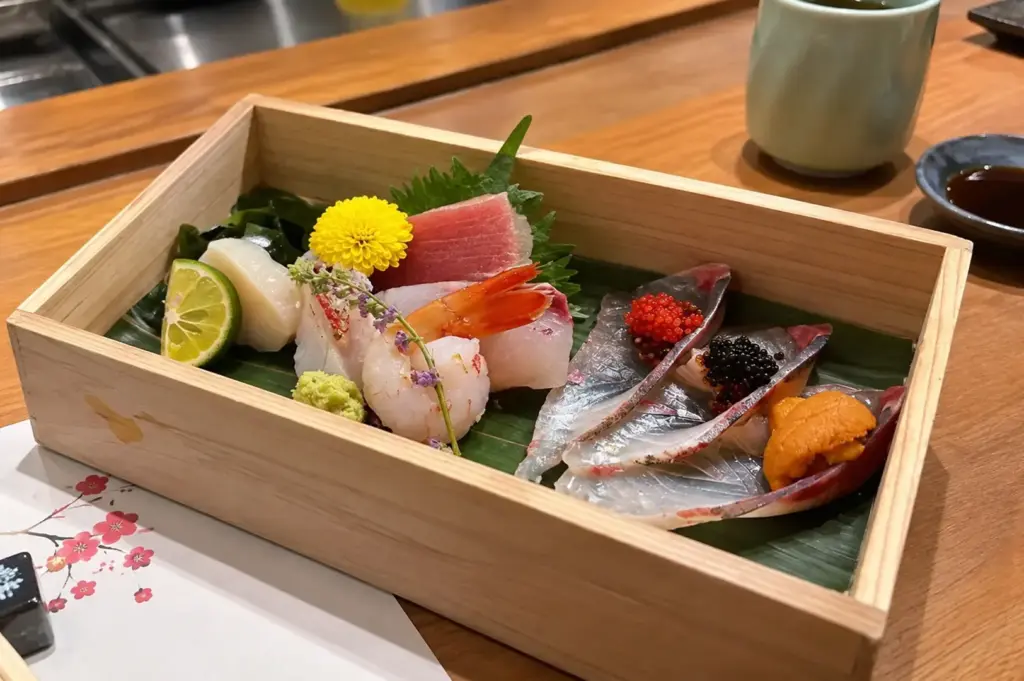
Assorted Seasonal Sashimi Bento ($100)
My Rating: ⭐⭐⭐⭐⭐
This is the order that explains the whole restaurant.
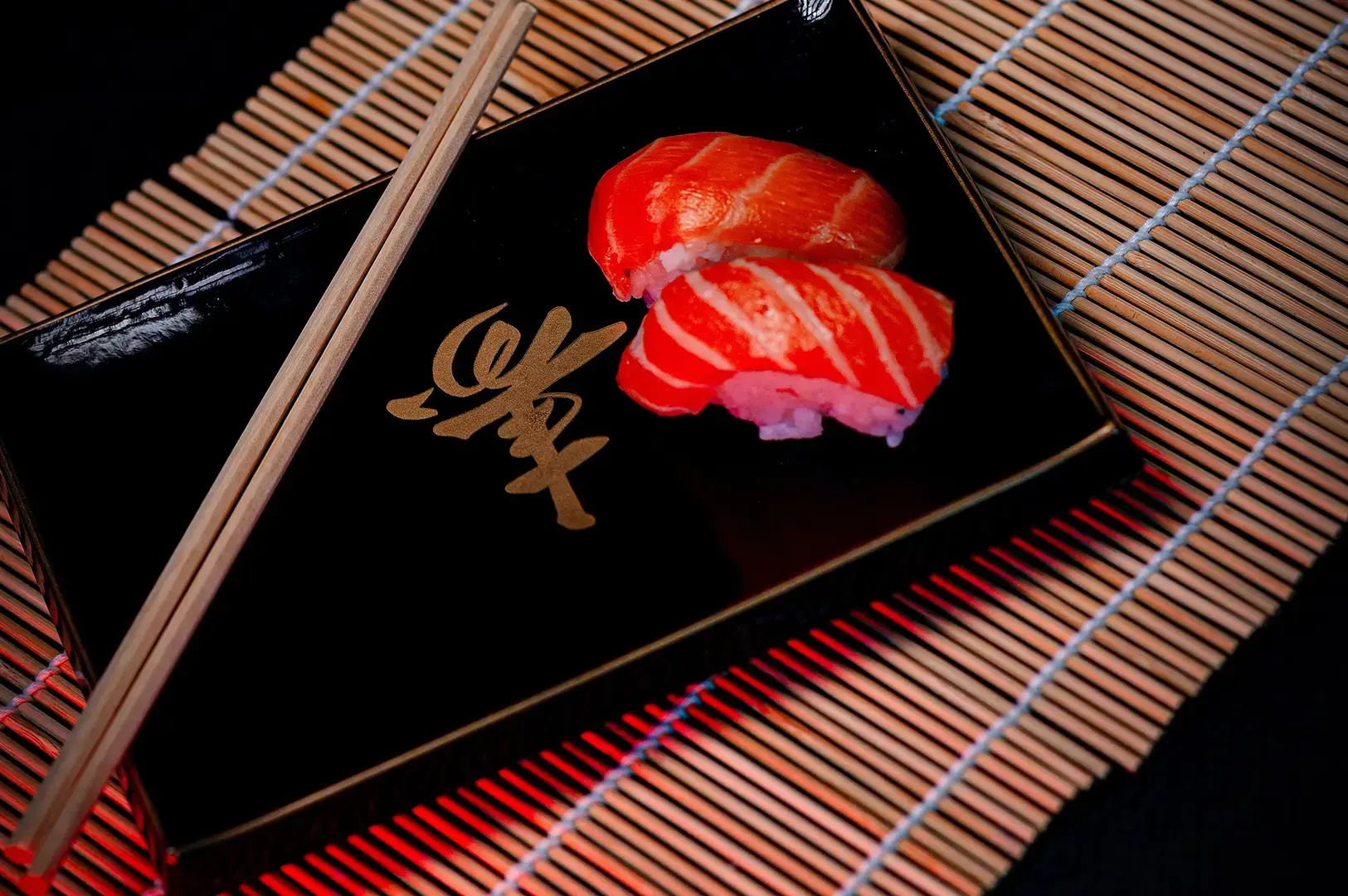
What arrives depends on the season and what came in fresh from Japan, which is the point. Instead of the tired salmon-and-tuna default, you might get amberjack, flounder, horse mackerel, scallop, Hokkaido rose prawn, ark shell, sweet shrimp, or abalone. It’s a spread that shows you how varied raw Japanese seafood can actually be, and how narrow most of our habits are.
The plating is composed rather than piled, arranged with a care that reviewers consistently notice. But the real test isn’t looks. It’s temperature and texture. The lean white fish should feel cool and firm. The shellfish should hold its bounce. The fatty cuts should soften on the tongue without turning greasy. On the strength of the sourcing and the knife work, this delivers.
The value here is honest. A hundred dollars is not cheap, but for this range and this freshness, it feels fair rather than inflated. I’d order it again without hesitating, and I’d tell a first-timer to ask for a mix of lean, fatty, silver-skinned, and shellfish. Order beyond salmon. That’s where the restaurant reveals itself.
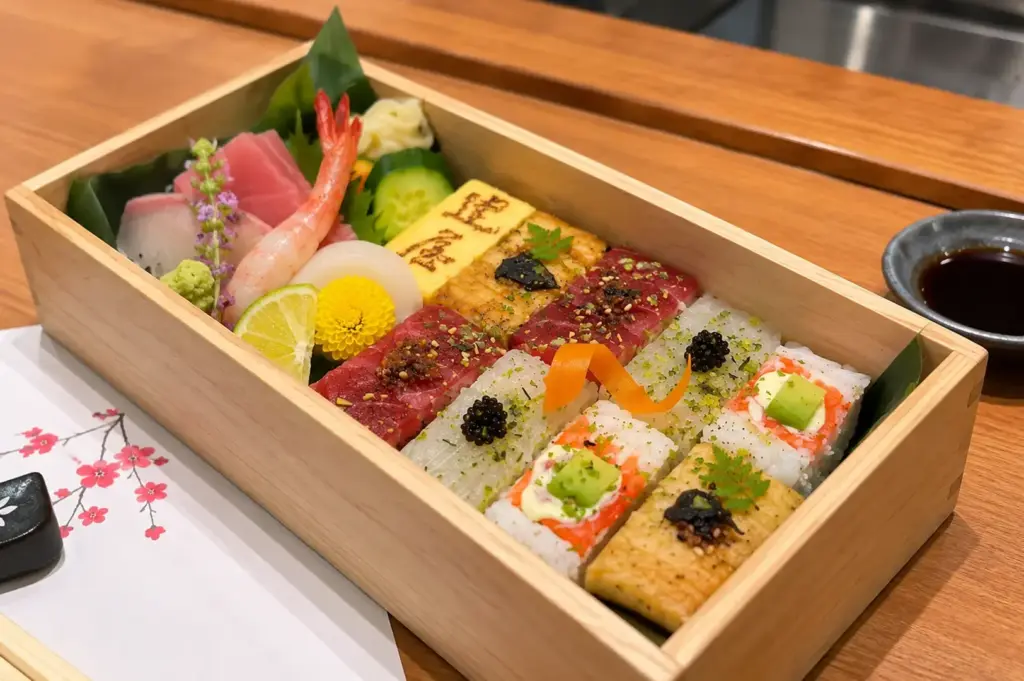
Oshizushi Sashimi Set ($120)
My Rating: ⭐⭐⭐⭐
This is the thoughtful order, the one that lets you taste the same seafood two ways.
The set pairs raw sashimi with pressed sushi. The sashimi shows you the fish in its plainest form, texture and flavour with nothing in the way. The oshizushi adds seasoned rice and a denser, more deliberate bite. Eaten side by side, you notice how much the rice changes the experience of the same fish.
At $120, it sits comfortably in Tatsuya Goodwood’s mid-range, and I’d argue it’s one of the smarter ways to understand what the kitchen team is doing. It won’t overwhelm you the way a full omakase might, and it doesn’t demand the same commitment. A steady, intelligent choice.
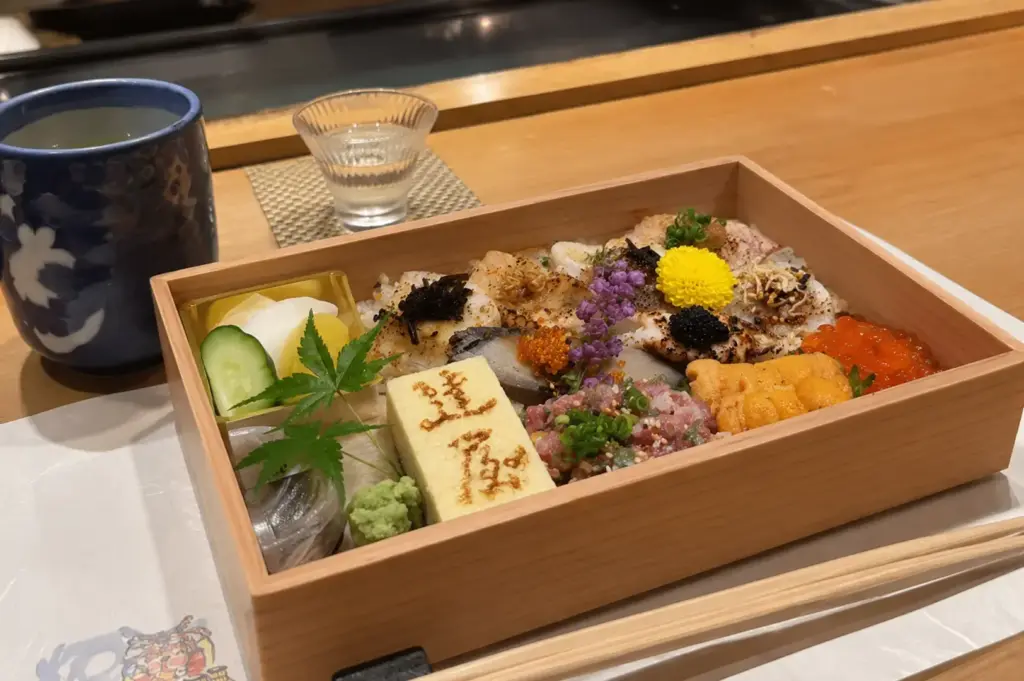
Saga Beef Don and Torched Chirashizushi ($150)
SENDs Rating: ⭐⭐⭐⭐
Here’s where Tatsuya Goodwood gets dramatic, and where I have a small quarrel.
The aburi (torched) sushi work is genuinely one of the restaurant’s signatures. Torching the fish changes everything. The surface turns lightly smoky and warm while the centre stays soft and mostly raw. Fatty cuts grow more aromatic as their oils release. It’s rich, indulgent, and undeniably impressive on the first few bites.
The saga beef don is another highlight, a great example of beef don done well. The tender Saga beef is prepared with care, served over rice with a balance of seasoning that lets the meat shine. This dish is expensive compared to typical beef don elsewhere, but worth the indulgence for those wanting a taste of premium Japanese beef in Singapore.
My caution is this. Tatsuya sometimes seasons and garnishes more assertively than a restrained Edomae counter would. One omakase diner complained that strong bonito flakes covered the fish rather than lifting it. I’d take that as a fair warning. The heat and the sauces can start to dominate. My advice, which I’d give anyone: eat your raw sashimi first, then move to the torched dishes. Do it the other way around and the smoke and richness blur everything that follows.
At $150 (or $200 for the larger version), it’s a proper spend for a rice bowl or platter, so treat it as a centrepiece rather than a casual add-on.
Service & Overall Experience at Tatsuya Goodwood: A Step Into Traditional Japanese Restaurant Hospitality
Service at Tatsuya Goodwood is where the reports jump left and right, and I won’t pretend otherwise.
At its best, this Japanese restaurant’s team are experienced chefs who know their craft, plate with care, and interact well at the counter. Repeat diners clearly value the familiarity, the ability to hand over the menu and trust what comes back. That kind of relationship takes decades to build, and Tatsuya has had them.
But the criticisms are consistent enough to mention. Some diners have found it hard to get attention when the room is busy. Others felt the omakase courses weren’t explained properly, or that the chefs were more engaged with their regulars than with the table in front of them. There’s a version of this restaurant that feels warm and personal, and a version that feels like you’re on the outside of an inside joke. Which one you get seems to depend on timing and luck.
One practical warning worth heeding. A diner reported being served a different sake from the one ordered, and only noticing at billing when it cost nearly double. It appears isolated, but it’s the kind of thing that leaves a wrong taste regardless of how good the fish was. Check the bottle, the label, and the price before it’s poured.
Things to Know Before You Book Tatsuya Goodwood at Goodwood Park Hotel for Authentic Japanese Cuisine
A few practical notes to sort out before you book.
Location: Tatsuya Goodwood, Goodwood Park Hotel, 22 Scotts Road, Singapore 228221.
Nearest MRT: Orchard MRT, roughly an eight to ten minute walk toward Scotts Road. The hotel has parking, and ride-hail drop-off at the entrance is straightforward.
Opening hours: Lunch 12pm to 3pm, dinner 6:30pm to 11pm.
Estimated spend: Around $70 to $120 per person for a lunch set such as sushi bento or sashimi bento or moderate à la carte meal. $120 to $200 for premium sashimi, chirashi, saga beef don, and drinks. $250 to $370 and beyond for a full dinner omakase with alcohol.
Reservations: Strongly recommended, especially for counter seats and weekend dinners. Book in advance through SevenRooms. Parties of six or more should contact the restaurant directly.
Private rooms: Minimum spend of $150++ per person at lunch, $300++ per person at dinner.
Two pieces of advice. First, when booking, say you want counter seats and you’re there for the sashimi. It sets the right expectation. Second, if you’re going for the raw fish specifically, call ahead and ask what’s come in that day. The best sashimi visit is the one built around what’s actually fresh.
SENDs Verdict on Tatsuya Goodwood and Authentic Japanese Cuisine at Goodwood Park Hotel
Price Range: $$
SENDs Rating: ⭐⭐⭐⭐
Tatsuya Goodwood is not the loudest name in Singapore’s sushi scene, and it doesn’t try to be. Its sashimi counter is the real draw, quietly excellent and genuinely varied. The dinner omakase is where the value conversation gets complicated, but the fish itself rarely disappoints. Come for the seafood, not the spectacle.
Hype For: Serious sashimi lovers, seasonal seafood enthusiasts, counter dining couples, and special occasions where quality matters more than novelty.
Hard Pass It If: You’re on a budget, you only eat salmon, you dislike garnishes and stronger seasoning, or you measure omakase value strictly by ingredient prestige.
SENDs Tip: Book the counter, go at lunch for better value, and order the assorted seasonal sashimi bento with a mix of lean, fatty, silver-skinned, and shellfish. Eat the raw sashimi before the aburi, and check your sake bottle and price before it’s poured.
Before You Decide on Tatsuya Goodwood at Goodwood Park Hotel
I left Tatsuya Goodwood thinking less about any single slice and more about time.
Twenty-seven years is a long life for a restaurant in a city that forgets quickly. Tatsuya has earned its place through the plain, unglamorous work of sourcing good fish and cutting it well, over and over, long after the trend cycle stopped paying attention.
It isn’t flawless. The service wavers, the top-end pricing invites fair questions, and the seasoning won’t please every purist. But sit at that counter with a platter of seasonal sashimi in front of you, and the case makes itself.
Whether it’s worth your money depends on what you want. If you’re chasing the newest, buzziest omakase, look elsewhere. If you want fresh, varied seafood from a kitchen that has been doing this quietly and well for decades, pull up a seat at the counter and order beyond salmon.
If you’re interested in exploring more sashimi restaurants in Singapore, click here to discover additional options and indulge in a variety of fresh, authentic Japanese seafood experiences.