
There’s a particular moment I still recognise in myself, years later.
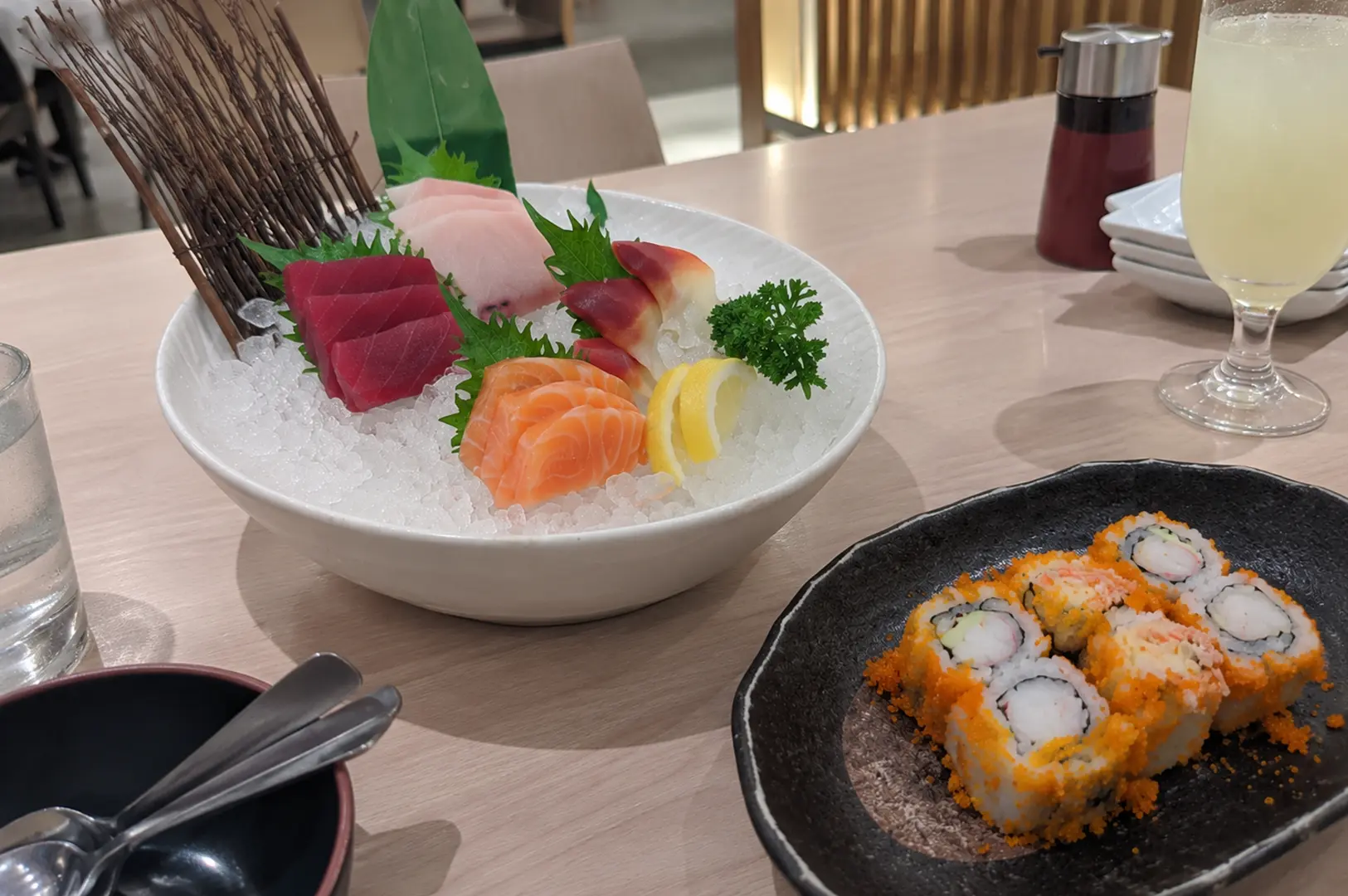
Standing at a Japanese menu, somewhere between a shopping mall chain and a quiet neighbourhood sushi restaurant, reading words that sit too close together. Sushi. Sashimi. Nigiri sushi. Maki. Aburi. Chirashi. Sushi rolls. Sushi burrito. Hand roll. All lined up like they were speaking the same language, and I nodded along like I understood.
For a long time, I assumed sushi and sashimi were just two words for the same thing: raw fish. It’s a fair assumption. Plenty of people carry it, and nobody at the counter is going to correct you.
But it isn’t quite right, and once you see why, the whole menu starts to make sense.
The easiest way I remember it is this: sushi is about the rice. Sashimi is about the raw fish or seafood. That single line has saved me more confusion than any long explanation ever did.
What Is Sushi: Raw or Cooked Seafood with Vinegared Rice and Soy Sauce
Sushi is not defined by raw fish. It’s defined by seasoned, vinegared rice.
That sushi rice (shari) is the heart of the whole thing. It’s cooked, then dressed with a mix of rice vinegar, a little sugar, and salt, which gives it a gentle acidity and a soft, slightly sticky texture. It isn’t filler. It carries the dish. The tang of the rice balances a fatty piece of fish, and its temperature and seasoning shape every bite before the topping even registers.
This is why plain steamed rice sitting next to a slice of fish is not sushi. The preparation matters. The seasoning matters. Without that treated rice, you’ve just got rice and fish on the same plate.
And here’s the part that surprises people: raw fish is optional. Sushi can be built around cooked seafood, egg, vegetables, tofu, pickles, or grilled ingredients. If you avoid raw fish or raw seafood entirely, there’s still a whole menu of sushi dishes open to you.
Common Types of Sushi: Nigiri Sushi, Sushi Rolls, Hand Roll, and Sushi Burrito Styles
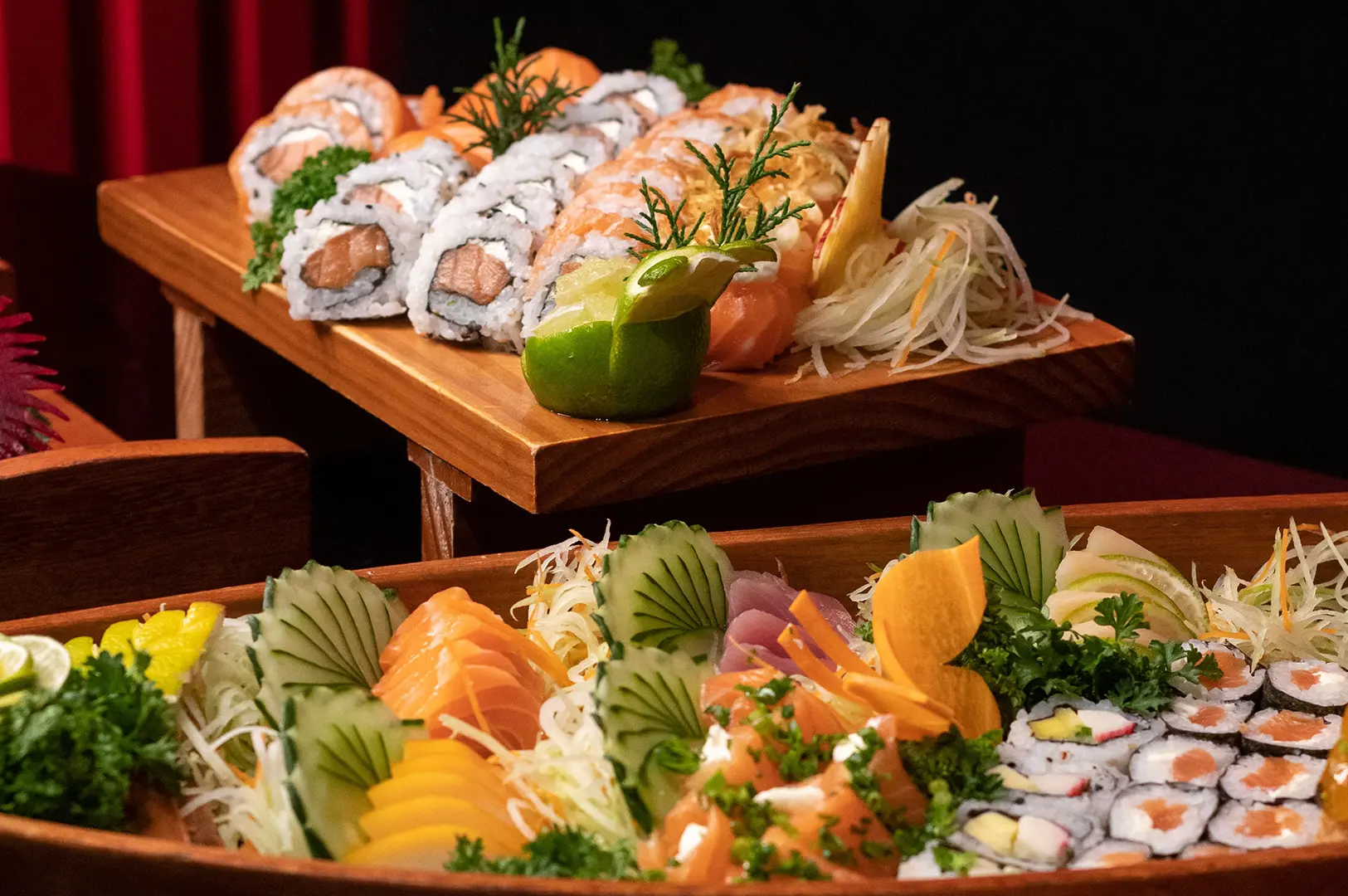
Once you know the rice defines it, the different shapes fall into place easily.
Nigiri Sushi
A small mound of seasoned sushi rice topped with raw, cooked, cured, or seared ingredients. Examples include raw tuna, salmon, cooked squid, or shrimp tempura, sliced with care using techniques like ito zukuri.
Maki and Sushi Rolls
Rolled sushi with rice and fillings wrapped in nori, sliced into bite-sized pieces. Variations include thin, fat, and inside-out rolls like California and rainbow rolls, often featuring avocado, cucumber, or spicy tuna.
Hand Roll
A cone-shaped nori wrap filled with rice, fish, and vegetables, meant to be eaten by hand before the seaweed softens. Usually contains a single filling like spicy tuna or shrimp tempura.
Sushi Burrito
A larger, modern roll resembling a burrito, combining vinegared rice, raw or cooked seafood, vegetables, and sauces, blending traditional sushi with contemporary food trends.
Chirashizushi and Other Styles
Sushi rice served in a bowl with assorted toppings scattered on top. Other styles include inarizushi (rice in fried tofu pouches) and temarizushi (small ball-shaped sushi).
If you want to learn more about sushi and discover where to try it, Izzah’s guide might be just what you need. Click here to read it now!
What Is Sashimi: Thinly Sliced Raw Fish or Seafood Served Raw with Soy Sauce
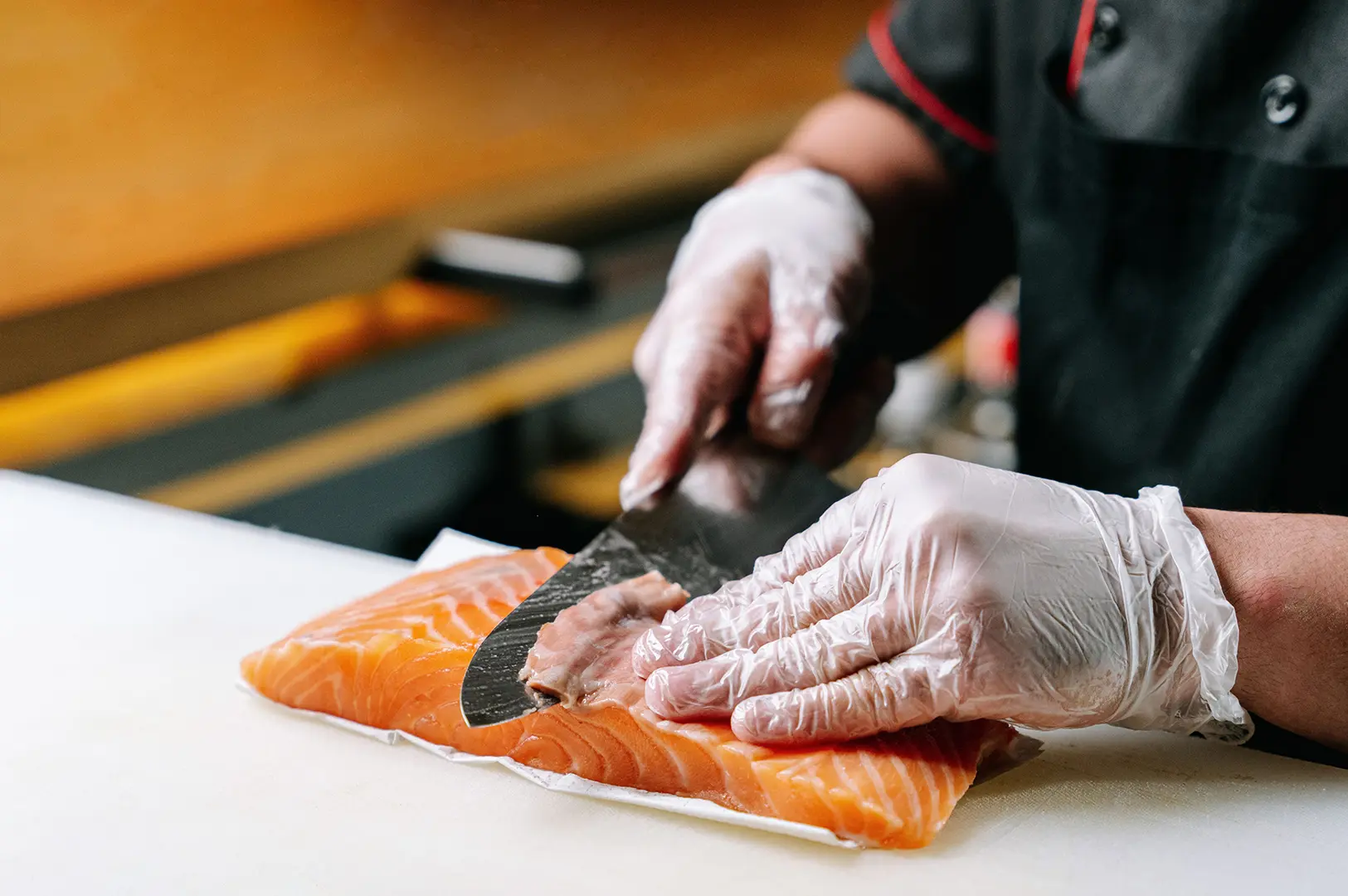
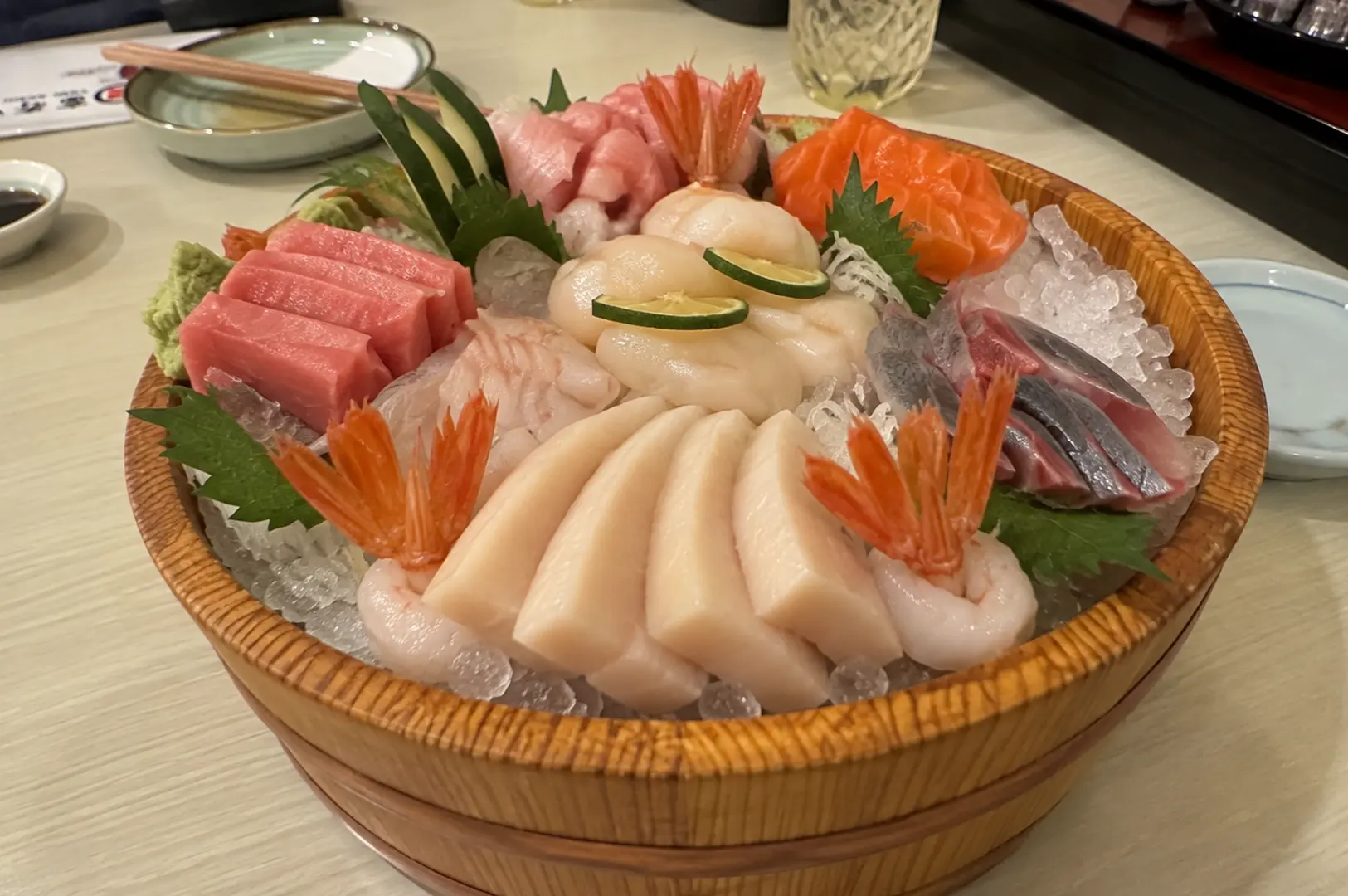
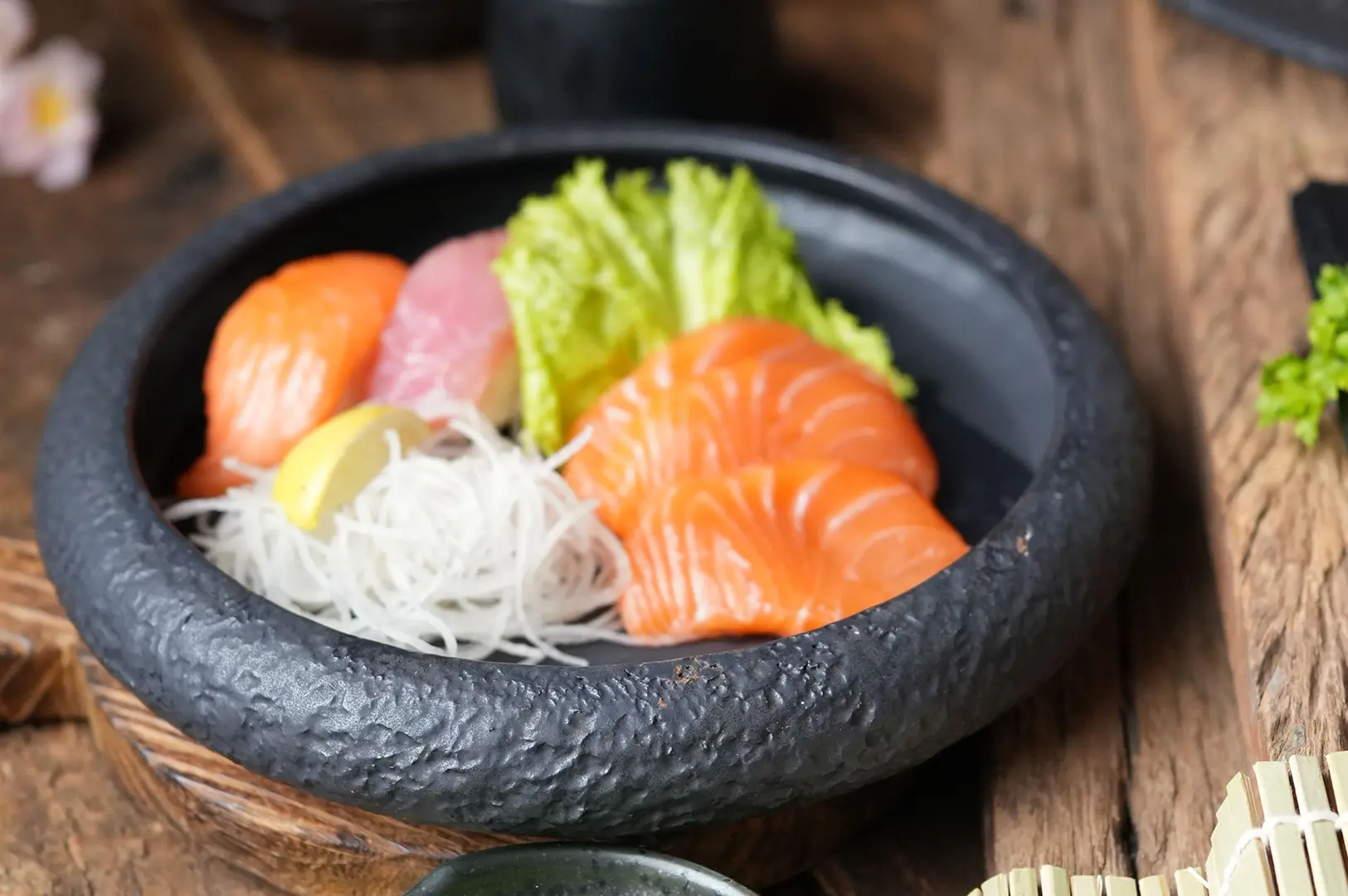
Sashimi is sliced fish or seafood, served without sushi rice.
That’s the whole idea. No rice, no roll, no nori binding it together. Just the ingredient itself, cut with care and put in front of you to taste on its own terms. When I look at a plate of sashimi, I’m looking at the fish and nothing else, and that’s exactly the point.
Because there’s nowhere to hide, everything about the handling shows. Freshness, temperature, the thickness of the thin slices, the angle of the knife. A good slice of sashimi is a quiet display of technique. The simplicity is deliberate, not incomplete.
It usually arrives with a few companions: soy sauce, a little wasabi, shredded daikon, sometimes a shiso leaf. These support the fish rather than dress it up. You notice the natural flavour and texture more directly this way.
Here are a few you’ll see often on a Japanese or sushi restaurant menu. Salmon sashimi is rich and mildly buttery, soft but with some substance, with those visible lines of fat that make it easy for beginners. Raw tuna, or maguro, tastes clean and savoury with a smooth, firm texture, leaner than the belly cuts. Otoro comes from that fatty tuna belly, richly marbled and soft to the point of almost giving way, and it usually costs more for exactly that reason. Hamachi, or yellowtail, carries a mild sweetness and a slightly fatty finish. Hotate is scallop, naturally sweet, tender with a gentle spring to it.
Tako, which is octopus, is worth a mention because it’s usually cooked before slicing. So not all sashimi is served raw, which trips up a lot of people. The Japanese have a special style called ito zukuri, where fish is cut into very thin pieces resembling threads, emphasizing the sushi chef’s knife skills.
Is Nigiri Sushi or Sashimi: Understanding the Role of Sushi Rice and Raw Fish
This one comes up constantly, and the answer is clean.
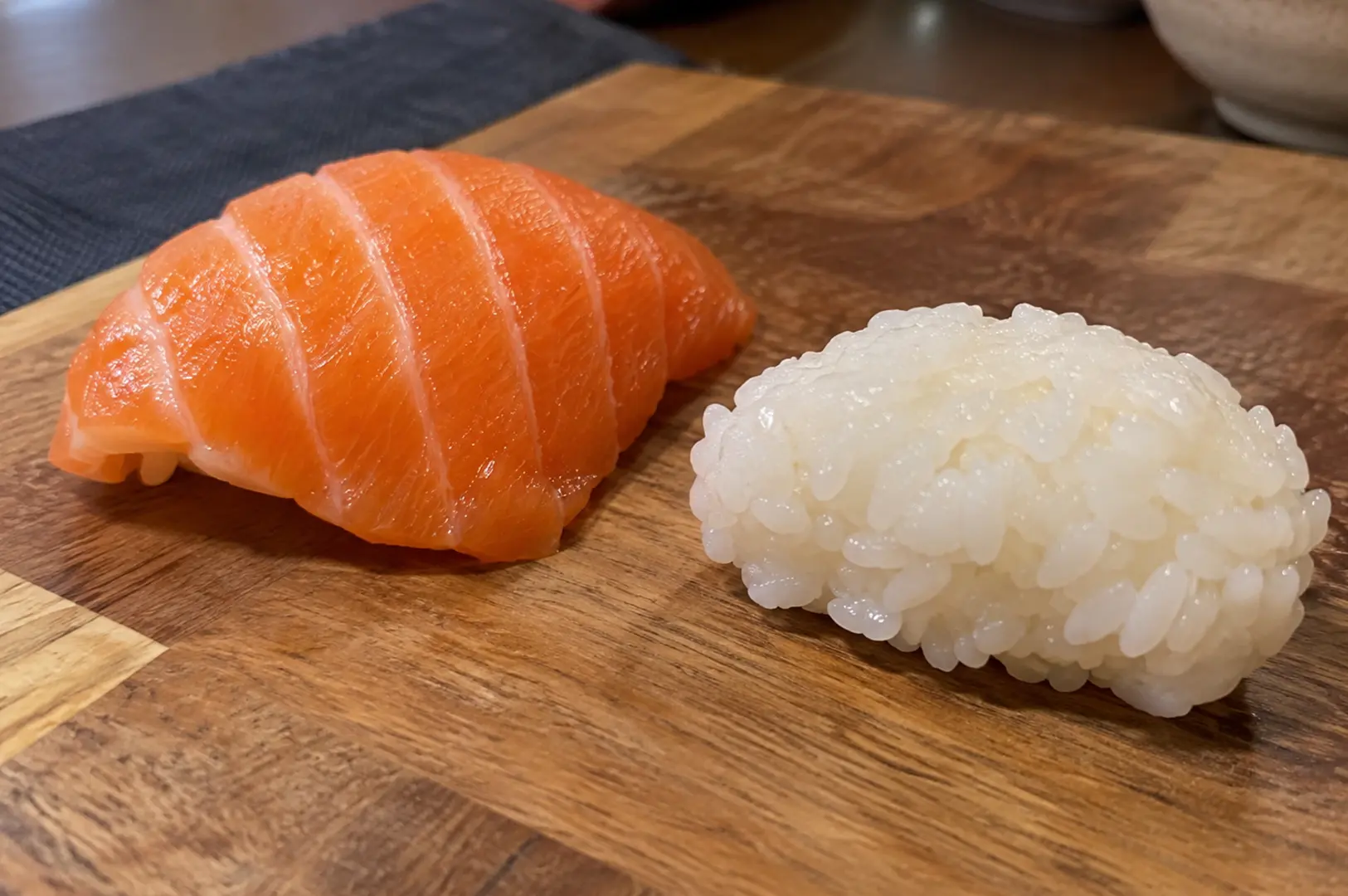
Nigiri is just one of the many types of sushi. It contains seasoned vinegared rice, and rice is what defines sushi. There’s no debate once you hold on to that.
Salmon makes the clearest comparison. Salmon sashimi is a slice of salmon on its own, no rice. Salmon nigiri sushi is a slice of salmon pressed over seasoned sushi rice. Same fish, two different dishes, and the rice is the whole difference.
I’ll add one honest caveat. Peeling the fish off a piece of nigiri does not give you sashimi. Proper sashimi depends on intentional cutting, handling, and presentation, not just the absence of rice. The fish for sashimi is often selected and sliced differently from the start. So they’re related, but not interchangeable.
Does Sushi Always Contain Raw Fish or Seafood?
No. And this is the single most useful thing to know if raw seafood isn’t for you.
Plenty of sushi uses cooked ingredients or non-fish components. Cooked shrimp tempura, grilled eel, Japanese omelette, cucumber, pickled vegetables, fried tofu, cooked crab, imitation crab, and seared salmon all show up regularly.
I’ve watched friends assume a sushi dinner was off the table because they don’t do raw fish, then happily work through a plate of tamago, unagi, and tempura rolls. The category is far wider than its reputation suggests.
Is Sashimi Always Fish or Seafood?
Mostly, but not strictly.
Sashimi is most closely tied to fish and seafood, and on a standard Japanese menu, that’s almost always what you’ll get. But the term sometimes stretches to other carefully sliced ingredients depending on the restaurant or region.
You might occasionally come across sashimi-style beef, horse meat, chicken, tofu, or konnyaku. These are less common here, and I wouldn’t expect to see them at your average sushi chain or hotel buffet. For most diners, sashimi means sliced fish or seafood, and that’s a safe assumption to walk in with.
How Sushi vs Sashimi Taste Different: Layered Flavours vs Pure Raw Fish
The eating experience is where the gap really opens up.
Sushi is layered. A single bite might bring seasoned rice, nori, seafood, avocado, fish roe, a smear of dipping sauce, maybe a bit of tempura crunch or a pickled note. You can get acidity, sweetness, saltiness, creaminess, softness, and crunch all at once. A good sushi roll feels playful, almost busy, in a way that rewards you for paying attention to how it’s assembled.
Sashimi strips all of that away. There’s no rice to balance, no sauce built in, no contrast engineered for you. What matters here is the fish itself: its firmness, its fat content, its natural sweetness, how clean the flavour is, how the texture shifts as you chew. A sushi roll performs for you. Sashimi just sits there quietly and lets the seafood do the talking.
Neither is better. They’re different pleasures. Some nights I want the layered version. Some nights I want nothing between me and the fish..
Which Is Better for Beginners: Sushi Rolls, Nigiri Sushi, or Sashimi?
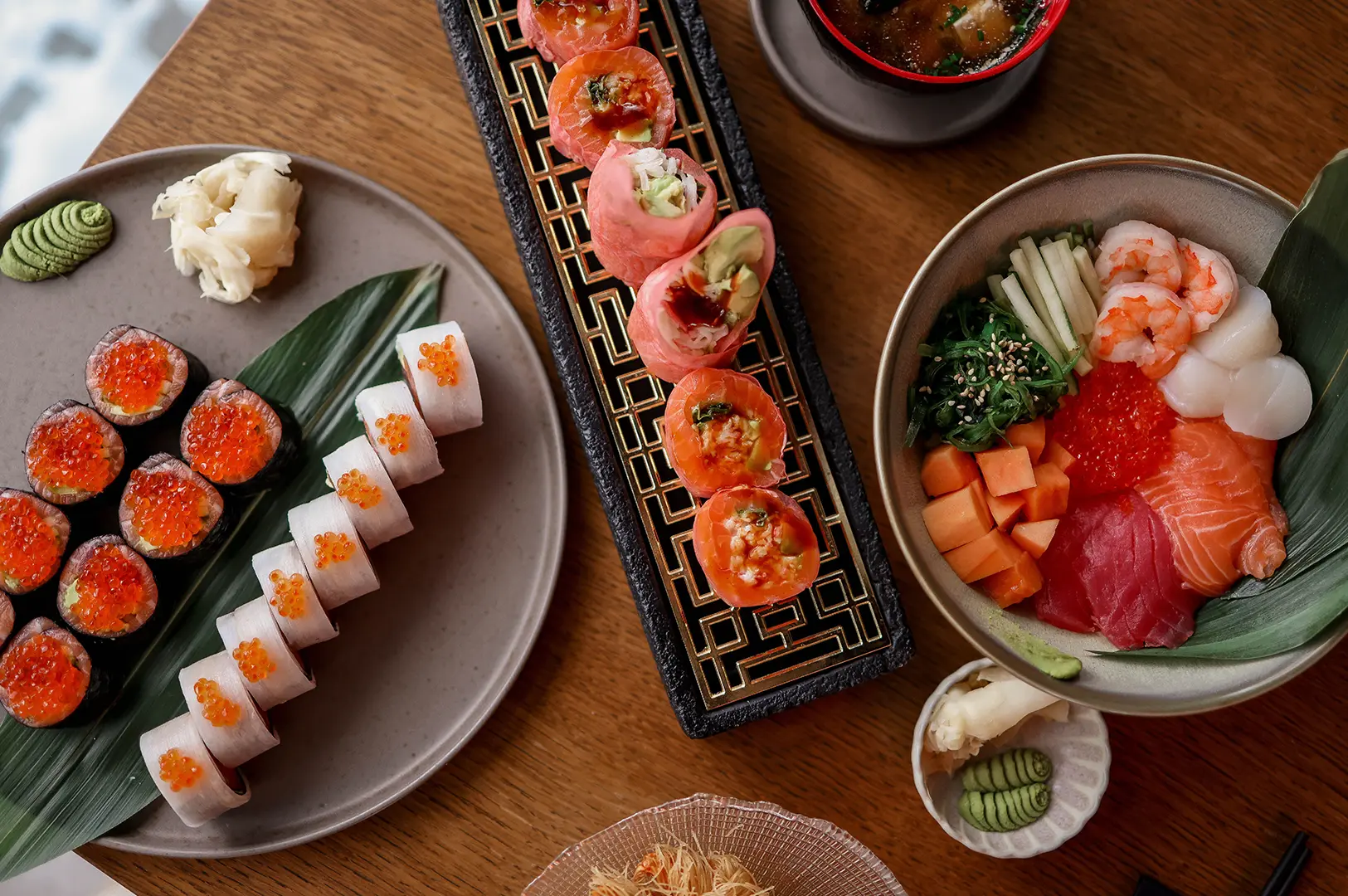
I’d usually point beginners towards sushi first, and the reason is simple: you get to choose your comfort level.
With sushi, you can pick cooked and familiar. Start with California rolls, avocado roll, tamago nigiri, cooked shrimp nigiri, cucumber maki (kappa maki), unagi nigiri, shrimp tempura rolls, aburi salmon nigiri, or spicy tuna rolls. Nothing there demands a leap into raw fish, and it eases you in gently.
If you’re ready to try sashimi, keep it approachable. Salmon is the softest landing, rich and forgiving. Lean tuna is clean and mild. Scallop is sweet and delicate. Yellowtail sits somewhere in between. Taste as you go and notice what your palate actually likes.
There’s no single right answer here. It comes down to how you feel about raw seafood on any given day.
Quick Comparison of Sushi vs Sashimi
| Sushi | Sashimi |
|---|---|---|
Defining feature | Seasoned vinegared rice | Thinly sliced raw fish or seafood |
Contains rice | Yes | No |
Requires raw fish | No | Usually raw, some cooked |
Common presentation | Nigiri sushi, sushi rolls, hand roll, sushi burrito, sushi plates | Neat thin slices on a plate |
Main flavour focus | Rice, topping, sauces combined | The ingredient on its own |
Vegetarian options | Yes, several | Rare |
Portion style | Often a full meal | Appetiser or shared plate |
How filling | More filling | Lighter |
Beginner-friendly picks | California roll, avocado roll, spicy tuna roll, shrimp tempura roll, tamago nigiri | Salmon, lean tuna, scallop |
So, Which One to Eat: Sushi vs Sashimi in Japanese Cuisine
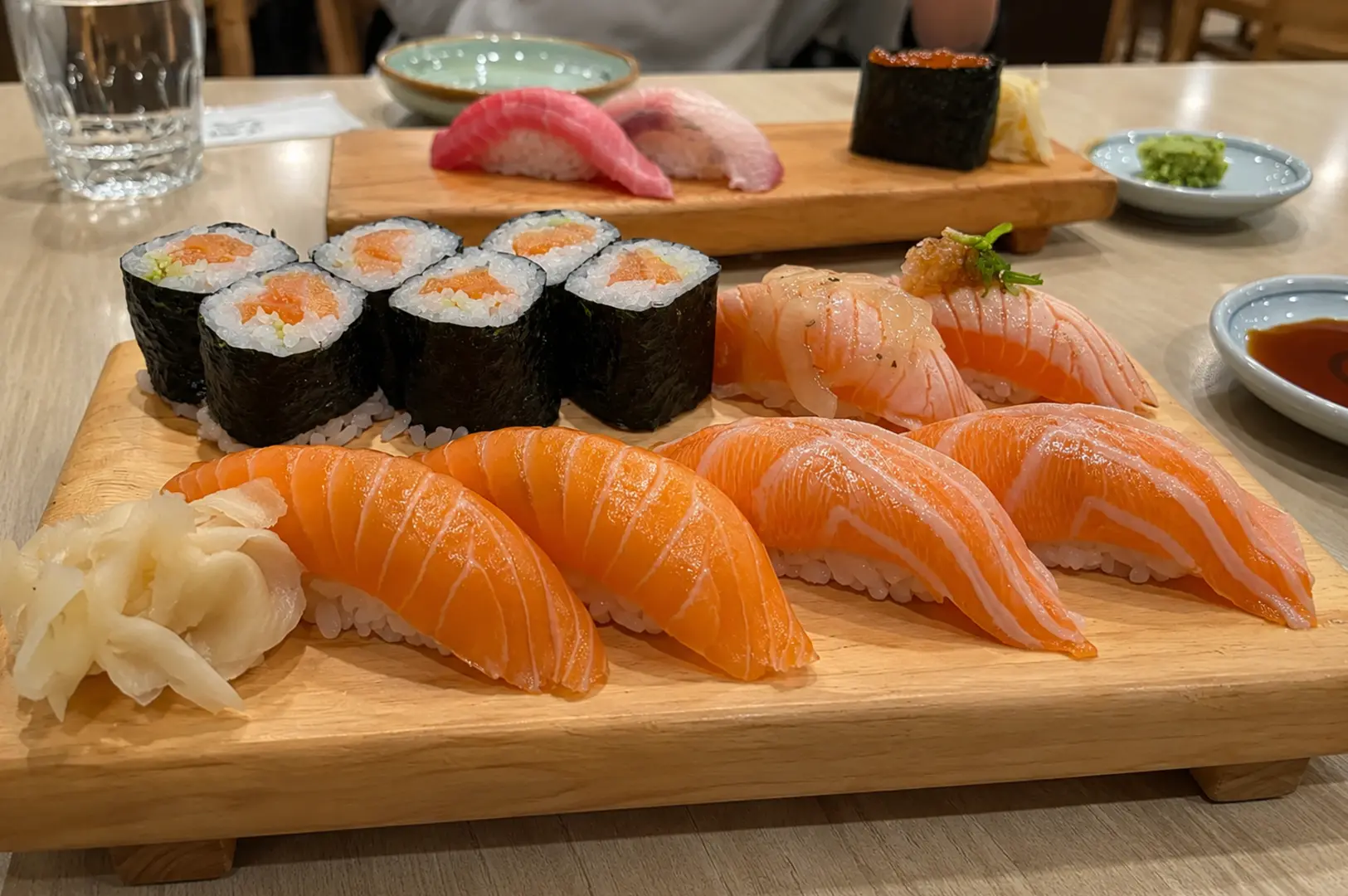
It comes back to the rice, every time.
Sushi is built around that seasoned vinegared rice, which is why it can be filling, varied, cooked, vegetarian, and endlessly assembled into different styles. Sashimi steps back and lets the thinly sliced ingredient carry the whole experience, lighter and more focused on the fish itself.
The better choice isn’t a fixed thing. It depends on whether you want a meal or a taste, layers or clarity, comfort or the fish standing alone.
Next time you’re reading a Japanese menu or visiting a sushi restaurant in Tokyo or anywhere in the world, slow down for a second. Notice whether there’s rice involved. That one detail tells you almost everything about what’s coming, and about what kind of night you’re in the mood for.
If this article made you crave some sashimi, come find us at Social Eats ‘N’ Drink, where we can guide you to the must-try spots for the freshest sashimi in Singapore.