
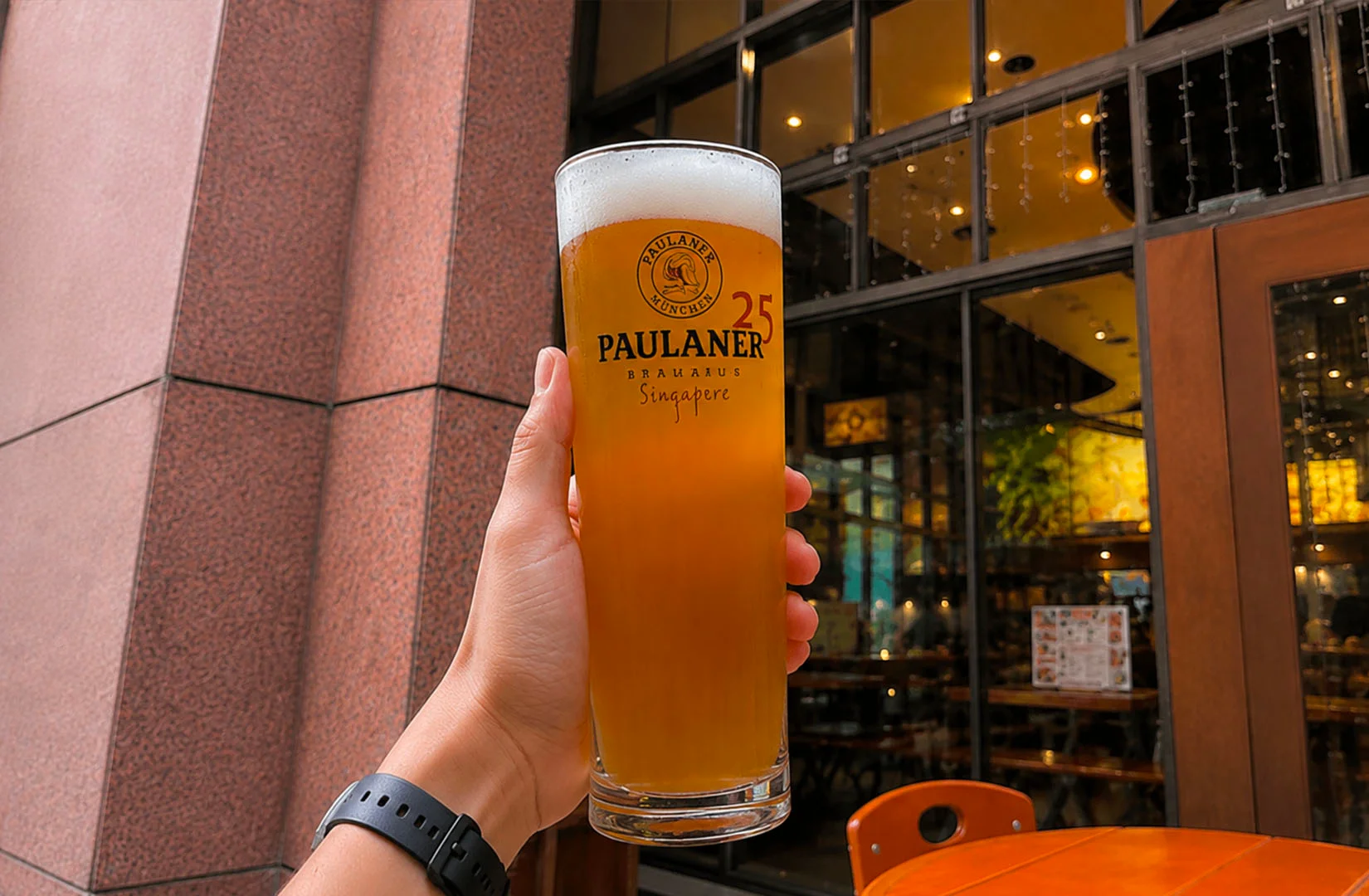
The glass reached my hand cold and heavier than I expected, its sides already beading with damp. It was a Paulaner Bräuhaus Lager, 0.5 litre (S$18), freshly brewed on-site and pale beneath its cap of foam. It was certainly a less glamorous glass than the one I had from Republic Bar, but I’ve never been one to be fussy on that. Around me, conversation moved in a low, steady hum, and somewhere close there was the smell of warm bread and something roasting slowly. The foam settled at the rim while I watched, soft and unhurried. Until that moment, Oktoberfest lived in my head as clichés: oversized glasses, crowded tables, traditional costumes. I sat down quietly curious about what might be underneath all that spectacle.
The first sip was cooler than I thought, clean at the front and rounder near the finish, with a softness that did not rush to leave. I found myself slowing down without meaning to. There was something deliberate about all of it, I realised, the weight of the glass, the careful pour, the pause before drinking. Here, beer was not something you gulped between sentences. It felt like the beginning of a ritual you were meant to sit inside.
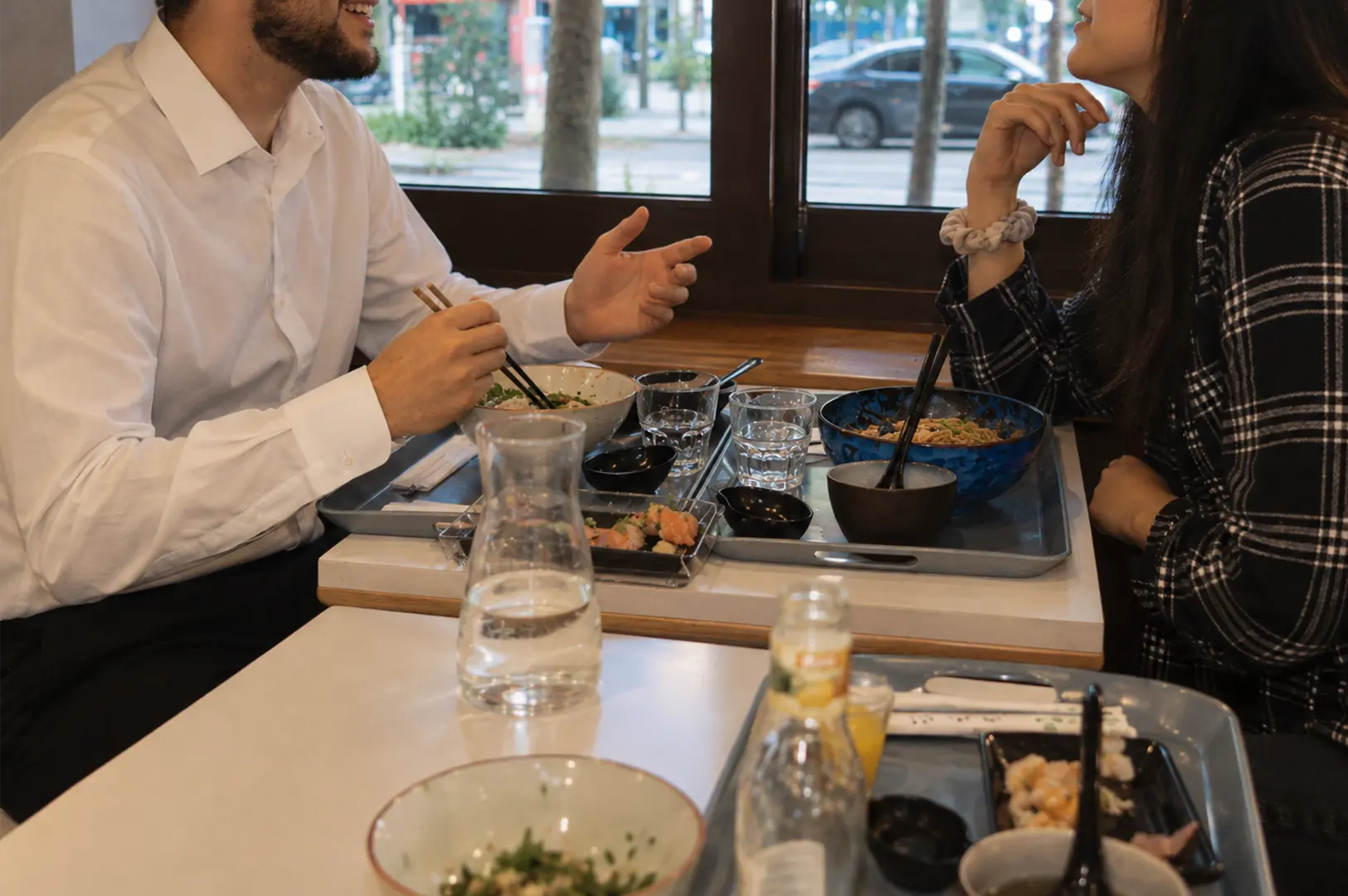
I looked up from my glass and started noticing the room that I had only read about from here. Groups leaned towards one another across the tables, plates passed from hand to hand, laughter loosening as the evening stretched on. Nobody seemed in a hurry to leave. That was when it settled in me: Oktoberfest was never really about how much beer arrived at the table. It was the gathering, the repetition, the quiet act of taking part. A raised glass stops feeling like a performance when everyone around you lifts theirs too.
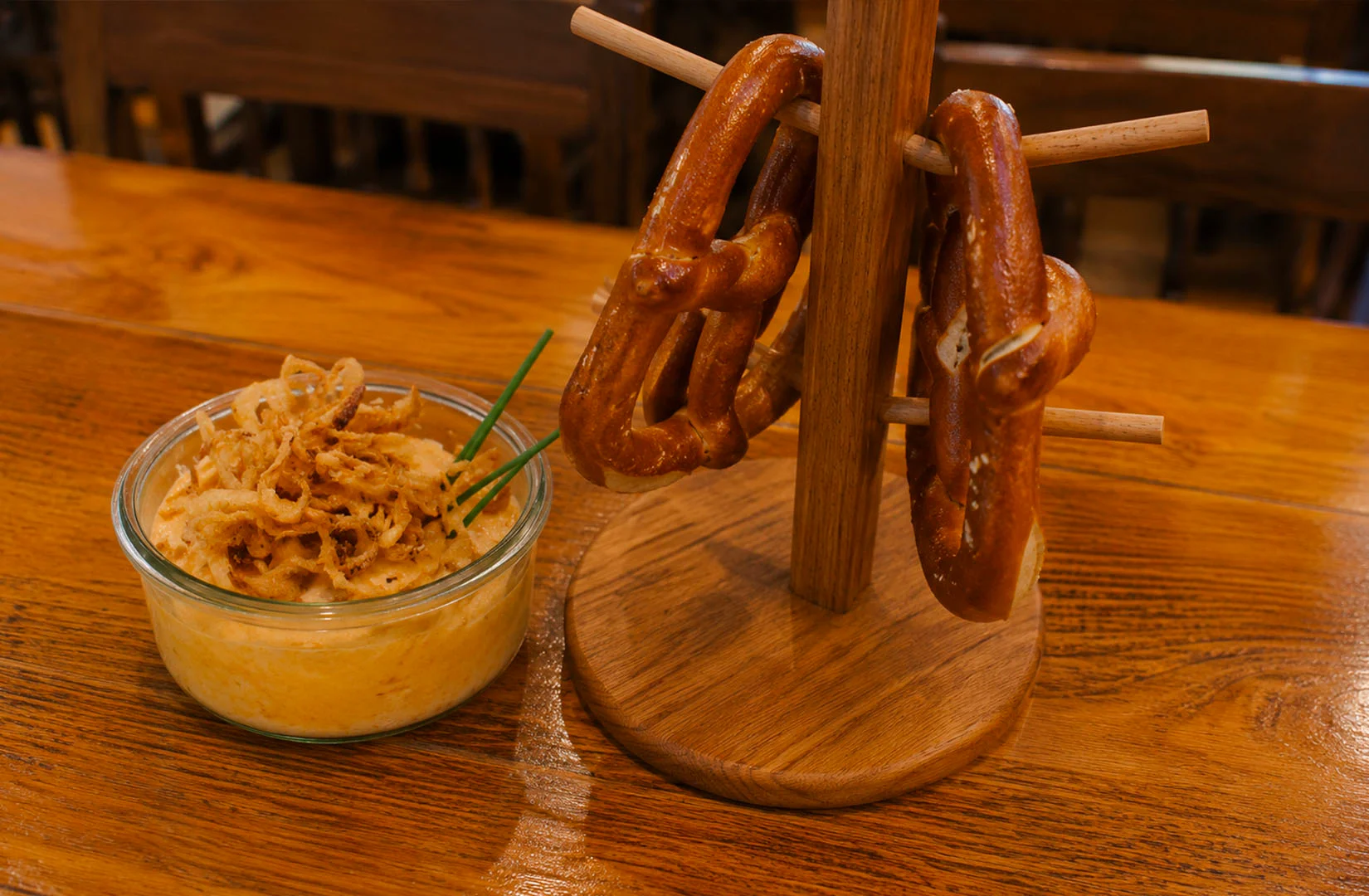
Then the food came, and it changed the pace again. The Original Munich Obazda and Pretzel (S$19) arrived warm, the salt catching the light as the bread was torn and shared without ceremony. Beside it was a Signature Sausage Pan (S$29), the sausages still steaming against the coolness lingering in my glass. There is a particular comfort in tearing bread and handing half across the table. The food gave everyone a reason to stay a while longer, and I understood then that celebration is built through small repeated things, not spectacle.
It struck me that I was doing all this inside Millenia Walk, not Munich. I will not pretend it was Germany, exactly. Traditions shift when they travel, softening at the edges and borrowing the room they land in. Yet the emotional centre held. Paulaner Bräuhaus offered more than themed decoration and imported beer. In fact, its beers are brewed on-site, making the restaurant part beer hall and part working microbrewery. It gave me a temporary sense of belonging, the kind where customs I had never grown up with became approachable simply by eating, drinking and watching other people enjoy themselves.
My glass was nearly empty now, the room easing into the softer part of the evening. I came in thinking Oktoberfest began and ended with beer. What stayed with me was smaller and warmer than that: the feeling of being quietly invited into a shared ritual, and choosing to stay.
Visit Social Eats ’N’ Drinks for more personal stories about the food, drinks and traditions that bring people together in Singapore.