
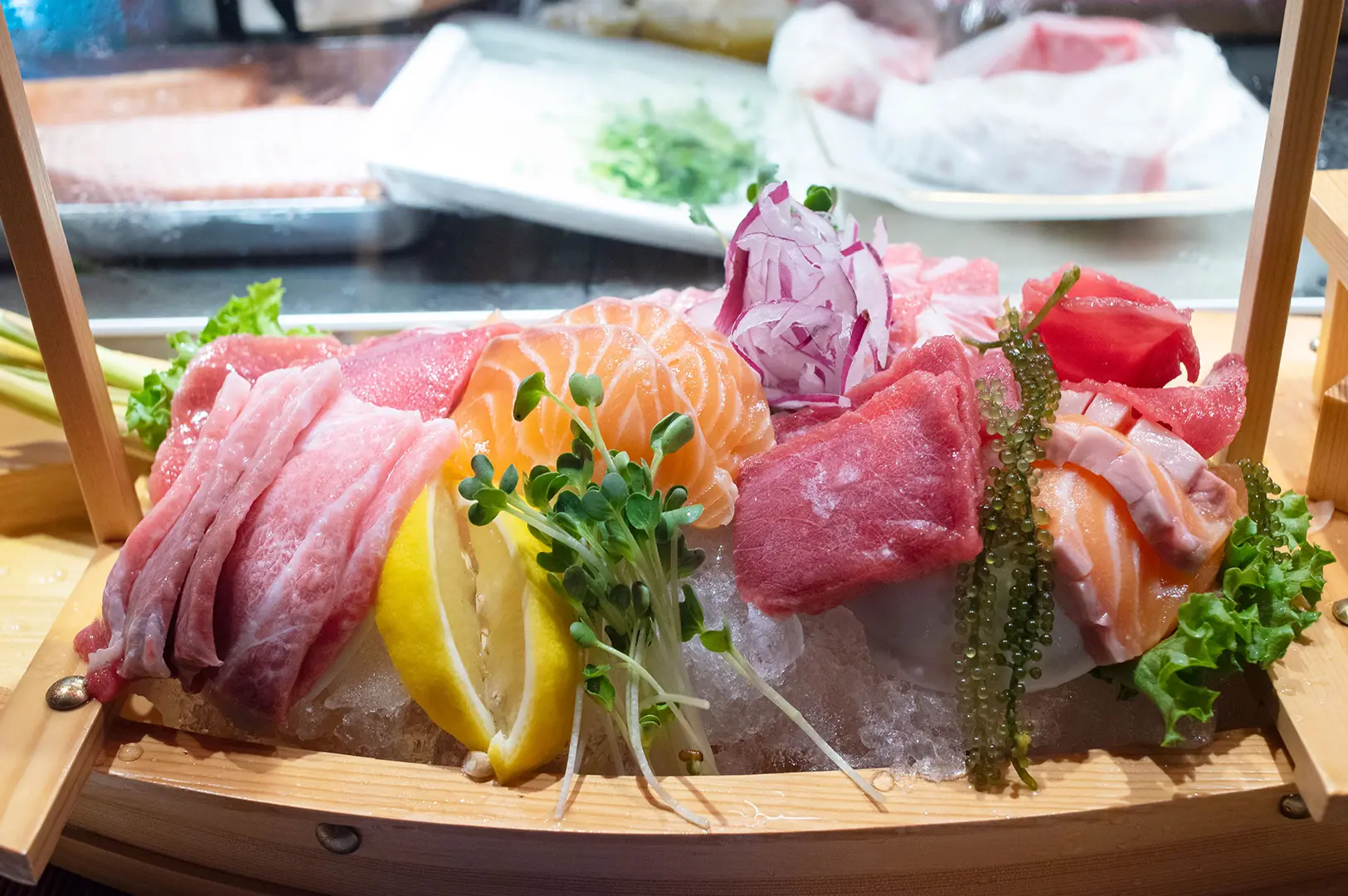
Our team’s first proper sashimi order went wrong in a very expensive way. One of us skipped the salmon, went straight for the priciest line on the menu, and ordered otoro. It was undeniably impressive. It was also so rich that two slices felt like plenty. The next week, a slice of plain lean tuna turned out to be the real favorite. Expensive and enjoyable, it turns out, aren’t the same thing.
That lesson shaped this guide. Most of us in Singapore meet sashimi through conveyor-belt sushi restaurants, buffets and office lunch sets, and nobody explains why salmon feels nothing like squid.
Below, we break down the main types of sashimi by flavor and texture, so you can order based on what you actually like. Once you know your style, browsing the best sashimi spots in Singapore becomes far less of a guessing game.
What Is Sashimi? Raw Fish in Japanese Cuisine
Sashimi is carefully prepared seafood, usually thinly sliced raw fish, served without rice. Unlike sushi, it doesn’t use vinegared rice at all. Sushi is about the balance of seasoned rice and topping. Sashimi puts the seafood alone in the spotlight.
Two quick myths to clear up. Sushi doesn’t automatically mean raw fish, since tamago and cooked prawn count too. And a dish called sashimi isn’t just nigiri sushi with the sushi rice removed. Without rice in every bite, you notice fat content, sweetness and firmness much more clearly. We think that makes sashimi the best way to train your palate.
After browsing through Japanese Table , i realized there’s no single right way to enjoy sashimi. Some people love the richness of salmon, while others prefer the cleaner taste of white fish.
Rich and Buttery Types of Sashimi: Salmon, Bluefin Tuna and Bigeye Tuna
Salmon
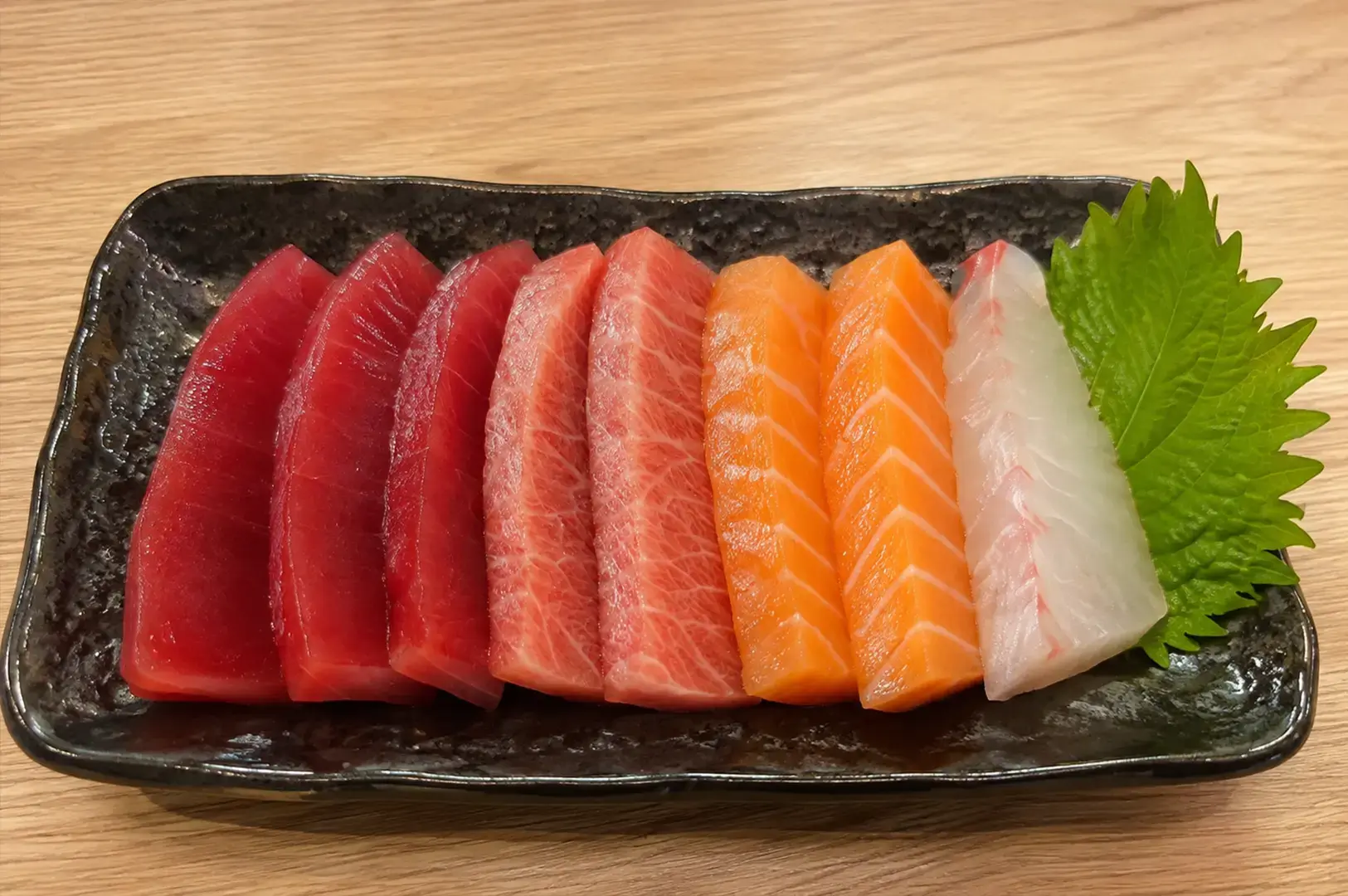
Salmon sashimi is the most popular fish on local menus for good reason. It has a mild flavor, gentle richness and a smooth, tender bite. Salmon belly is the fattier cut, softer and more buttery.
People often ask us whether wild salmon beats farmed salmon. Not necessarily. Farmed salmon tends to have consistent fat, while wild salmon varies by species and season. Neither origin makes fish safe to be eaten raw. Sourcing and handling do.
Tuna: Species vs Cut
Tuna sashimi confuses people because species and cut are two different things.
Bluefin tuna (hon-maguro): The prized species, capable of very fatty cuts
Bigeye tuna (mebachi): Deep red flesh, with fat varying by fish
Yellowfin tuna (kihada): Generally leaner and milder
The same fish can give you three cuts. Akami is lean tuna, meaty and clean. Chutoro is medium-fatty and balanced. Otoro, usually from the belly, is the melting fatty tuna with a buttery flavor.
Insider knowledge: Some Japanese chefs serve aged fish, matured under strict temperature control to deepen flavor and soften texture. That’s skilled technique, not old fish, and it isn’t something to attempt at home.
Rich but Firmer: Yellowtail and Kanpachi
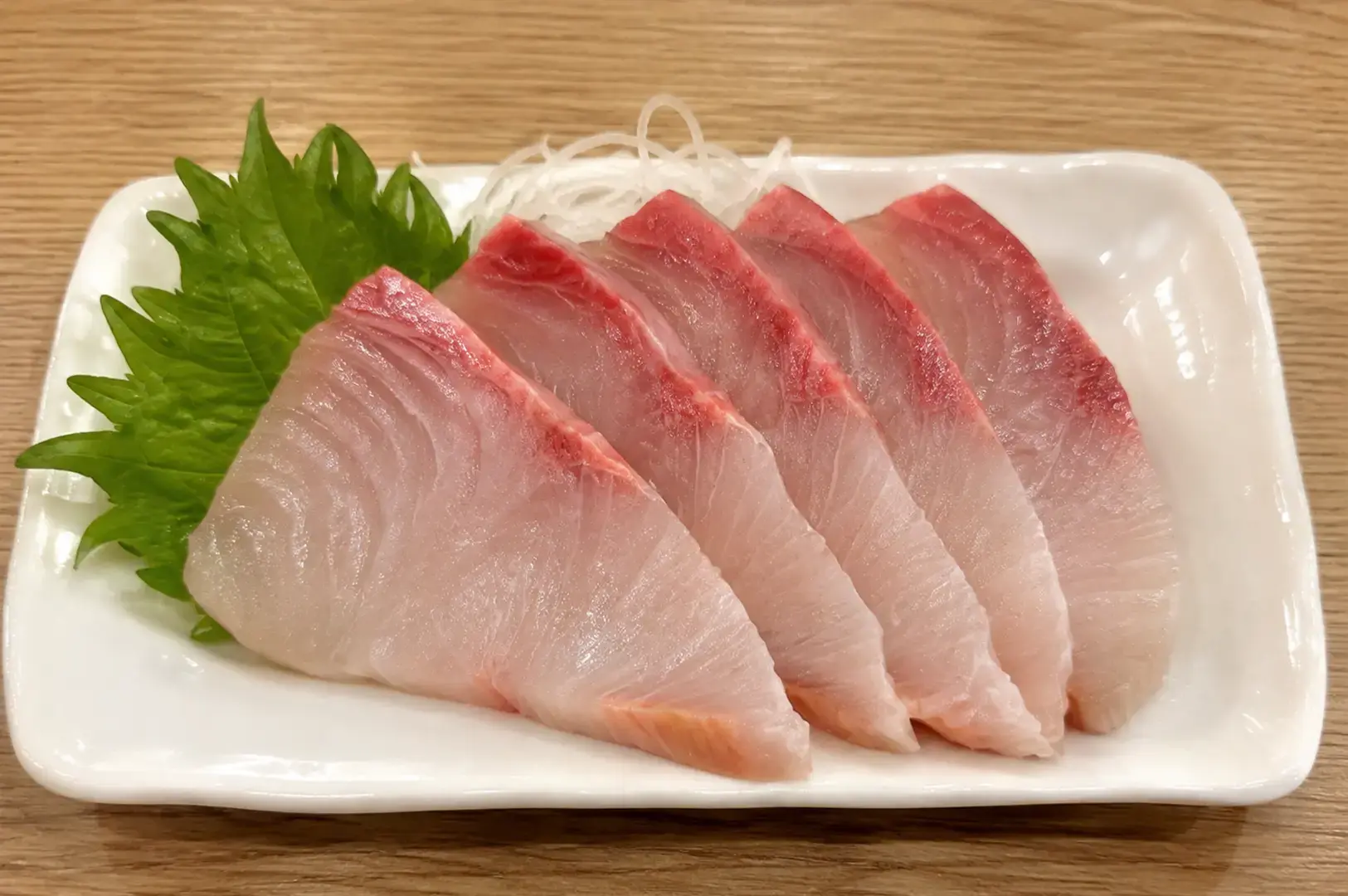
Hamachi usually refers to younger or farmed yellowtail, while buri means mature fish (winter buri is especially prized). It’s a rich fish with a slightly sweet edge but a firmer bite than salmon. If salmon is your comfort zone, I’d suggest hamachi as your next step.
Kanpachi is a related but different species. It’s a firm fish with a springy chew and a cleaner finish. I prefer it when I want satisfaction without heaviness.
Delicate White Fish Meat: Sea Bream and Hirame
Sea bream (madai) is a white fleshed fish with a delicate flavor and firm bite. In Japan, it’s tied to celebrations through wordplay with medetai, meaning auspicious. I once drowned a beautiful slice in soy sauce and tasted nothing but salt. Now I use a light dip or a squeeze of citrus.
Hirame (flounder) is lean and understated. Look for engawa, the muscle near the fins, which is richer and chewier. You may also spot sea bass on some menus, and it fits the same subtle, white-fish category.
Sweet and Chewy Sashimi: Scallop, Sweet Shrimp, Squid and Octopus
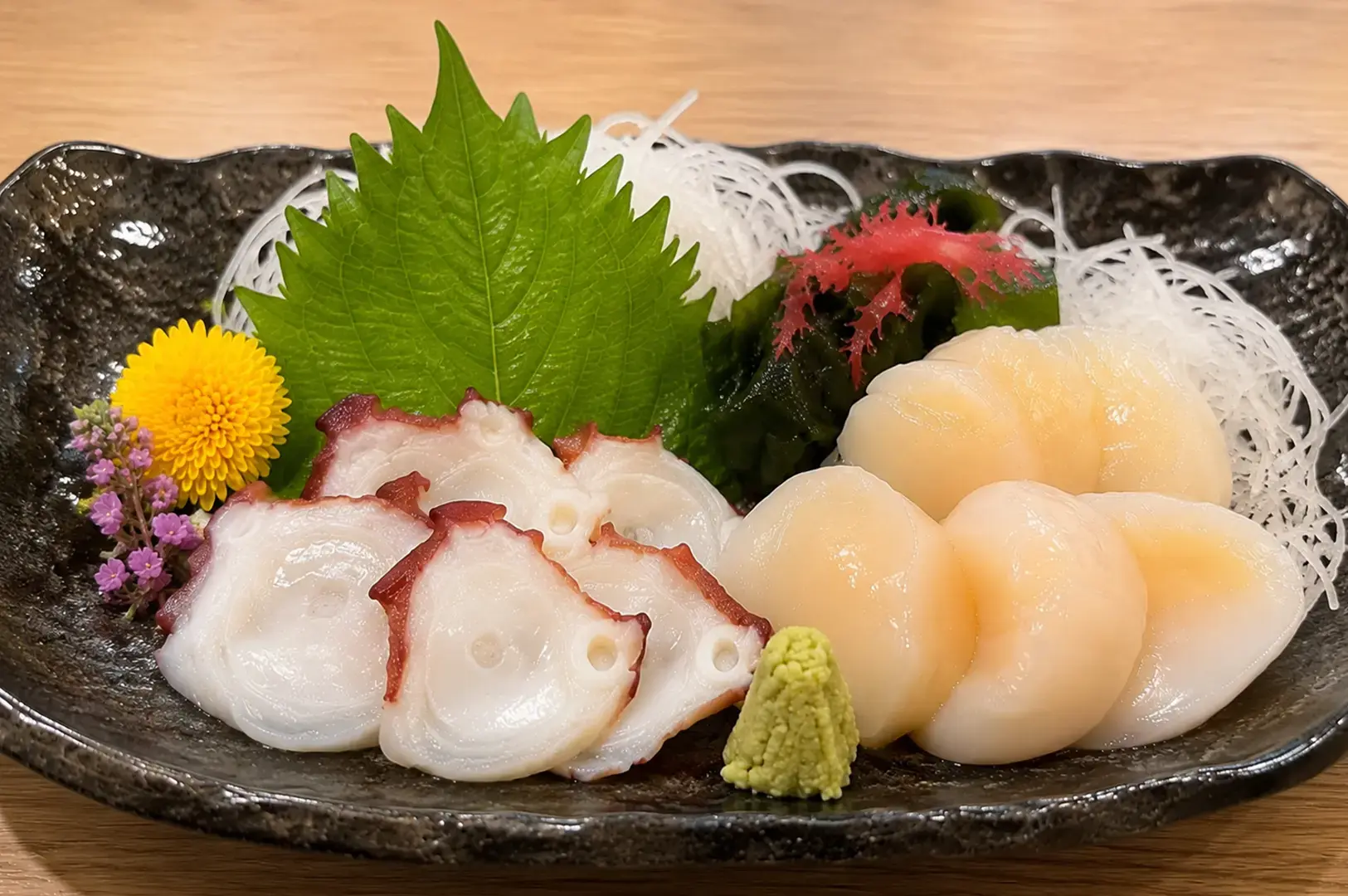
Hotate (scallop): The adductor muscle, with a natural sweet flavor and almost creamy softness
Amaebi (sweet shrimp): Soft and delicate in a way cooked prawns never are. Botan ebi is larger and pricier
Ika (squid): Fresh squid is all about texture, and fine knife scoring makes it easier to chew
Tako (octopus): Usually boiled before slicing, which proves sashimi-style doesn’t always mean served raw
Bold Flavors: Mackerel and Skipjack Tuna
Most Singaporeans know saba as grilled mackerel at a set lunch. As sashimi, it’s oily and pronounced. Many places serve shime saba, cured with salt and vinegar, but curing doesn’t reliably remove every parasite or microbe.
Skipjack tuna (katsuo) is darker and more robust than bluefin. It’s often served as katsuo tataki, seared outside and raw inside, topped with grated ginger, garlic and green onions.
Beyond Fish Meat: Sea Urchin and Salmon Roe
Uni comes from sea urchin and isn’t fish meat at all. Good uni is sweet, briny and custard-like, and its price reflects labor-intensive harvesting and delicate handling. Ikura is salmon roe, salty orange pearls that pop when bitten. You’ll usually find it on rice bowls, gunkan or chirashi rather than sliced on a plate.
Is Fresh Sashimi Safe in Singapore?
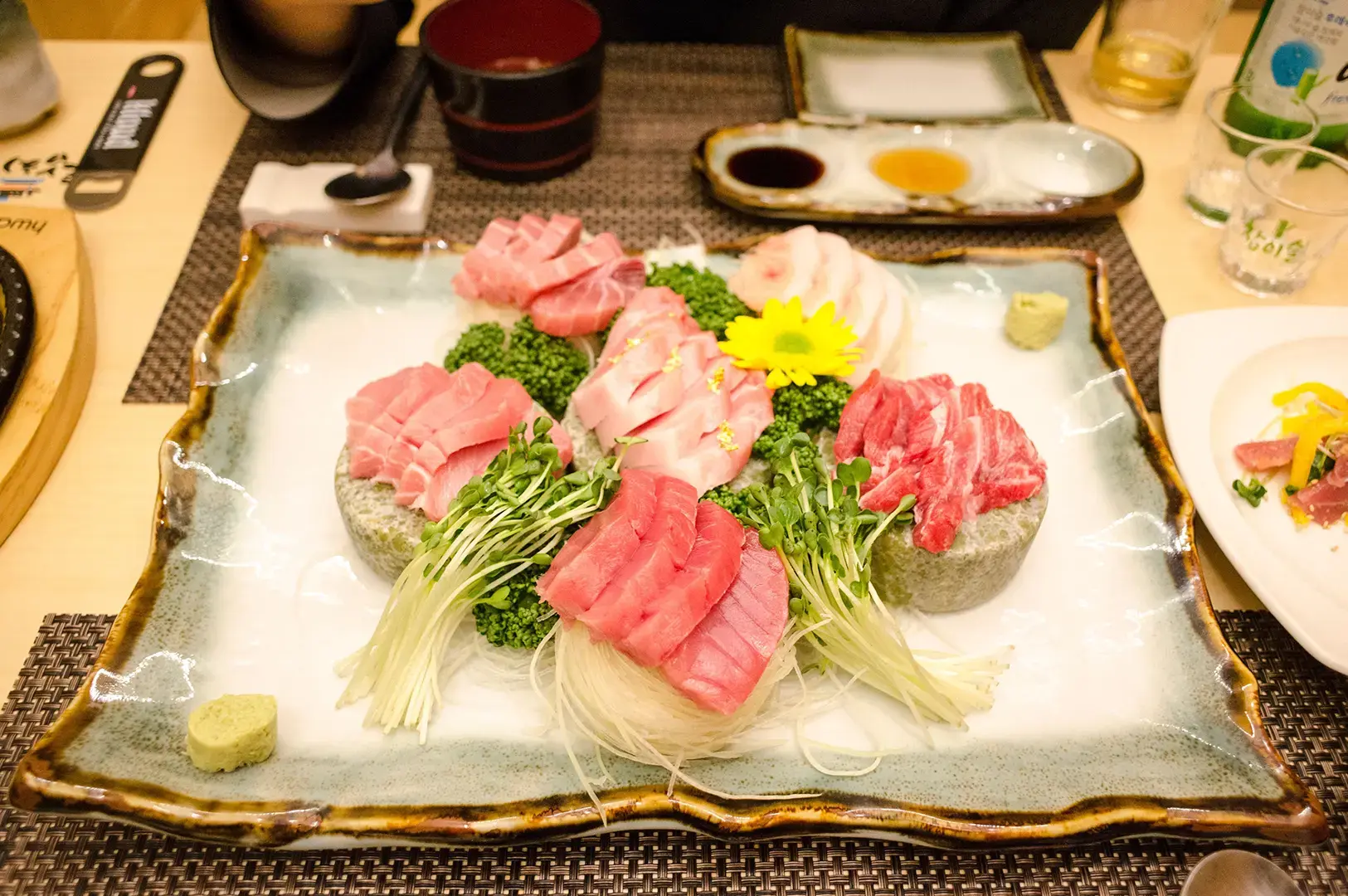
This is the question we hear most. The Singapore Food Agency (SFA) treats ready-to-eat raw seafood as higher risk because nothing cooks away bacteria or parasites. You can reduce the risk, but never eliminate it.
Buy from licensed sellers, and only fish intended for raw consumption.
Keep packaged sashimi refrigerated at 0°C to 4°C.
Pregnant women, young children, older adults and people with weakened immunity should avoid it.
Here’s a local detail many guides miss. After serious Group B Streptococcus infections in 2015, Singapore prohibited raw freshwater fish in ready-to-eat raw fish dishes. A fillet sold for cooking at the wet market isn’t automatically safe to slice raw.
Also, “fresh sashimi” doesn’t mean never frozen, and “eaten fresh” doesn’t mean caught this morning. Controlled freezing is often part of parasite control. “Sashimi-grade” is a label, not a guarantee.
Pro tip: A mild sea smell is normal. Sour, rotten or ammonia-like smells aren’t. Your nose can’t detect every hazard, though, so trust where you buy more than how it smells.
How to Eat Sashimi in Six Simple Steps
Go mild to rich. Sea bream, lean tuna, salmon, yellowtail, then fatty tuna.
Dip lightly. Too much soy sauce flattens delicate fish.
Use wasabi paste sparingly. At a premium sushi bar, the chef may have seasoned it already.
Use pickled ginger between bites. It resets your palate, much like when eating sushi.
Notice the texture. Smooth salmon, meaty akami and chewy squid all feel completely different.
Eat promptly. Don’t let chilled sashimi warm up on the table.
The important thing is to pay attention to what you like rather than what happens to be the most expensive option.
What Assorted Sashimi Costs in Singapore
Published menu prices show how wide the range is:
Restaurant | Item | Price |
|---|---|---|
IMA-SUSHI | Salmon sashimi | S$5.80 |
IMA-SUSHI | Five-kind assortment | S$25.90 |
Sakae Sushi | Three-kind sashimi | S$18.20 |
Hiyaki (33 Kampong Bahru Road) | Chutoro, five pieces | S$33.80 |
Hiyaki | Otoro, five pieces | S$45.80 |
Kan Sushi | Otoro, five pieces | S$64 |
Kakushin Japanese Dining (Scotts Square) | Otoro, five pieces | S$91 |
As a rough guide, expect S$6 to S$15 for a casual portion, S$20 to S$80 or more for a sashimi platter, and S$30 to S$100 or more for premium fish like fatty tuna. Prices change, so compare the species and piece count, not just the number on the menu.
Common Mistakes We’ve Made (So You Don’t Have To)
Assuming expensive means better. Our otoro story says it all.
Ordering a giant platter on the first try. Start with a small salmon portion.
Leaving takeaway sashimi in a warm car. If you can’t keep it chilled, order cooked dishes instead.
Treating supermarket cooking fillets as sashimi fish. Only buy fish labeled for raw consumption.
Final Thoughts
Sashimi gets much easier to enjoy once you stop treating it as one dish. Start with salmon, try a lean-to-fatty tuna comparison, and let your own taste decide what’s worth paying for. Sashimi lovers aren’t born knowing this stuff. They just keep tasting.
If you found this guide helpful, check out Social Eats N Drinks for more food guides, honest reviews and dining ideas around Singapore.